Riso Linework Diptych
Reinterpret a still life, portrait or travel photo with limited-color Riso textures and loose linework in a 3:4 diptych. AI style preview; results vary by input and model.
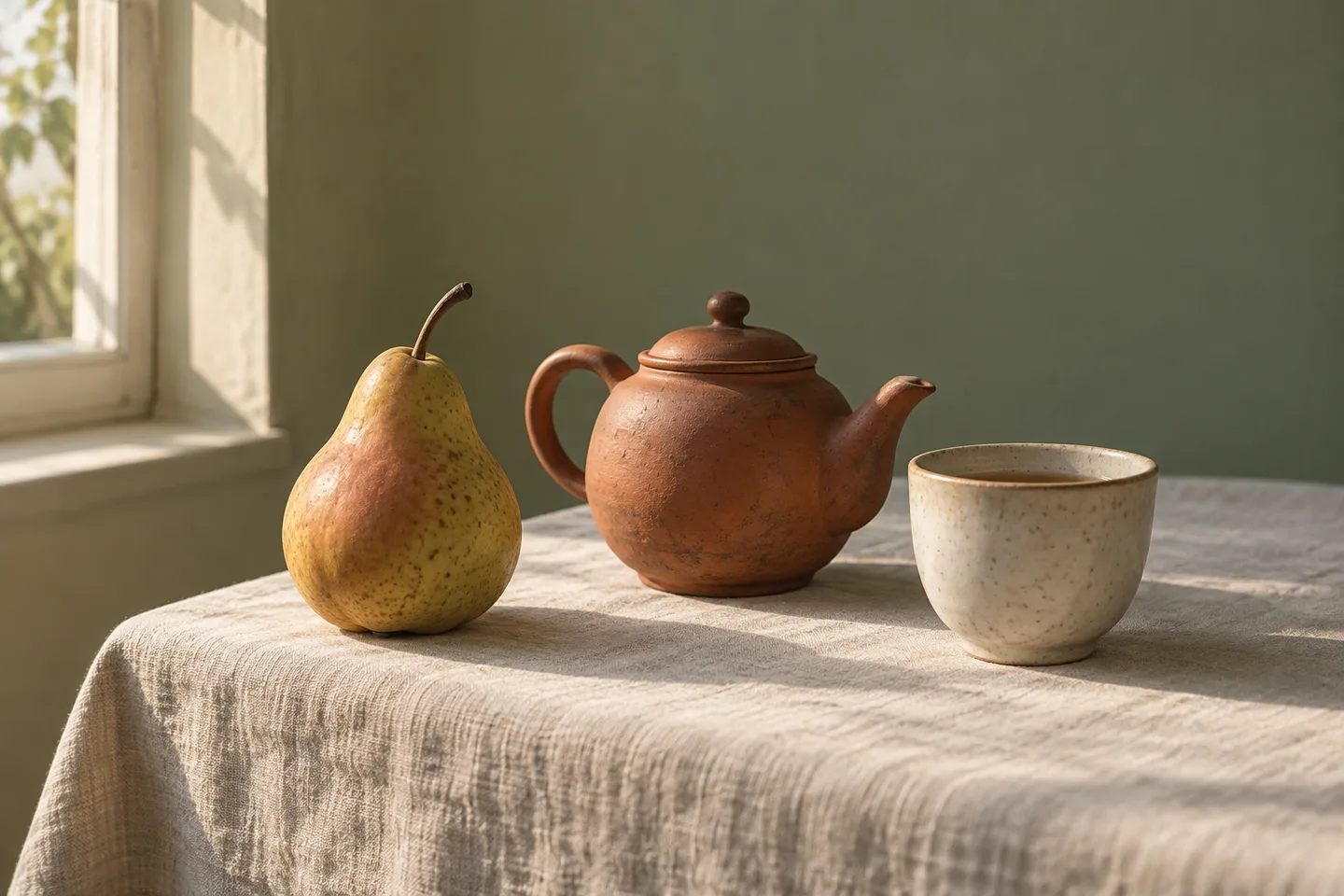
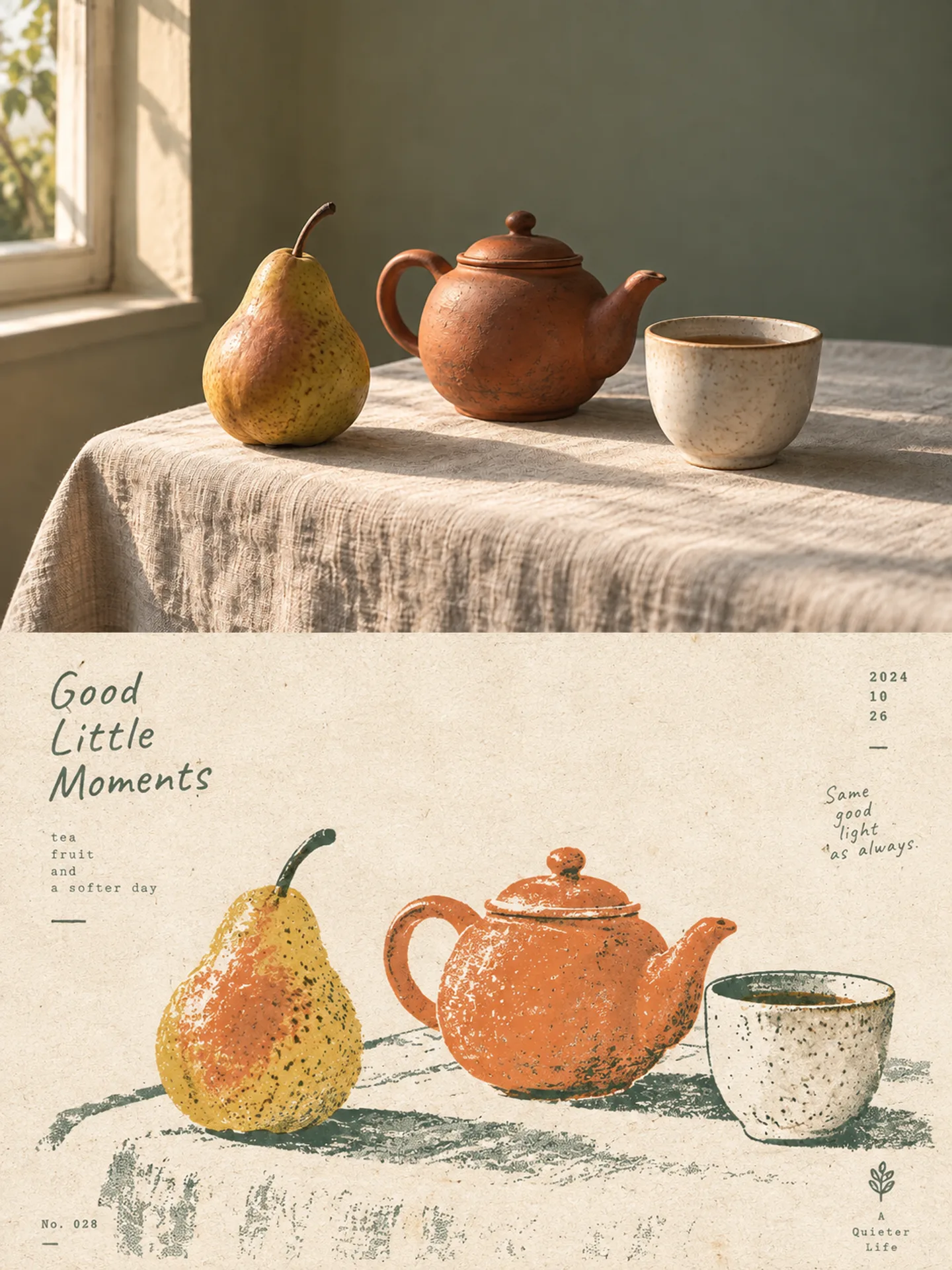
Reinterpret a still life, portrait or travel photo with limited-color Riso textures and loose linework in a 3:4 diptych. AI style preview; results vary by input and model.
Photo Skill documented with a real comparison
Riso Linework Diptych pairs a photographic upper panel with a loosely drawn, limited-color interpretation below in a 3:4 vertical image. The intended look uses paper texture, halftone-like dots and small registration offsets. Choose a still life, portrait or travel scene whose main shapes remain readable without fine photographic texture.
Use the published before-and-after pair to judge the style. Compare the subject count, pose and object relationships, then inspect whether ink texture supports the drawing or hides it. The output simulates a Riso print appearance digitally; it is not a physical risograph print or a set of press-ready color separations.
A person, animal, building, or object with a clear silhouette gives the transformation reliable identity anchors. If the subject is already tiny, blurred, or hidden, stylization cannot safely recover missing visual evidence.
Hands, held objects, furniture, companions, and horizon lines should be separated clearly enough to understand. This helps the result preserve the event in the photograph instead of treating every shape as decoration.
The source does not need to resemble the finished artwork, but it should have enough resolution and breathing room for Riso Linework Diptych to reorganize color, surface, and composition without losing the main subject.
Use the camera file when possible. Avoid screenshots containing app interfaces, heavy existing filters, large obstructions, or repeated compression, because those artifacts can be interpreted as part of the scene.
The creator's optional guidance is: Use natural light and a clear subject. Still lifes and simple compositions work well. Default: 3:4. Treat it as clarification, not a request to replace what is visibly present.
Check the face, pose, object count, contact relationships, and overall composition first. Then evaluate palette and texture. If essential content is wrong, retry with a clearer source rather than attempting to repair missing evidence with a long prompt.
Upload a naturally lit photo with clear shapes and use Riso Linework Diptych. Compare the lower illustration with the source, checking subject relationships before judging dots, paper texture and color overlap. Keep the result only if those choices suit your intended artwork.
Do not assume it is press-ready. The download is raster artwork, not separate ink layers. Ask the printer for its requirements and prepare the separations, dimensions and proof independently.
Both start from one ordinary photo and create a photo-and-illustration diptych. This Skill adapts its limited colors to the photo. Five Ink Riso Recolor uses a fixed cream, sky blue, petroleum blue, mustard and vermilion palette. Neither requires a prepared line drawing.