Observational Pen Wash
Pairs real photography with a sparse, rhythmic pen-and-wash observation that knows when to stop.
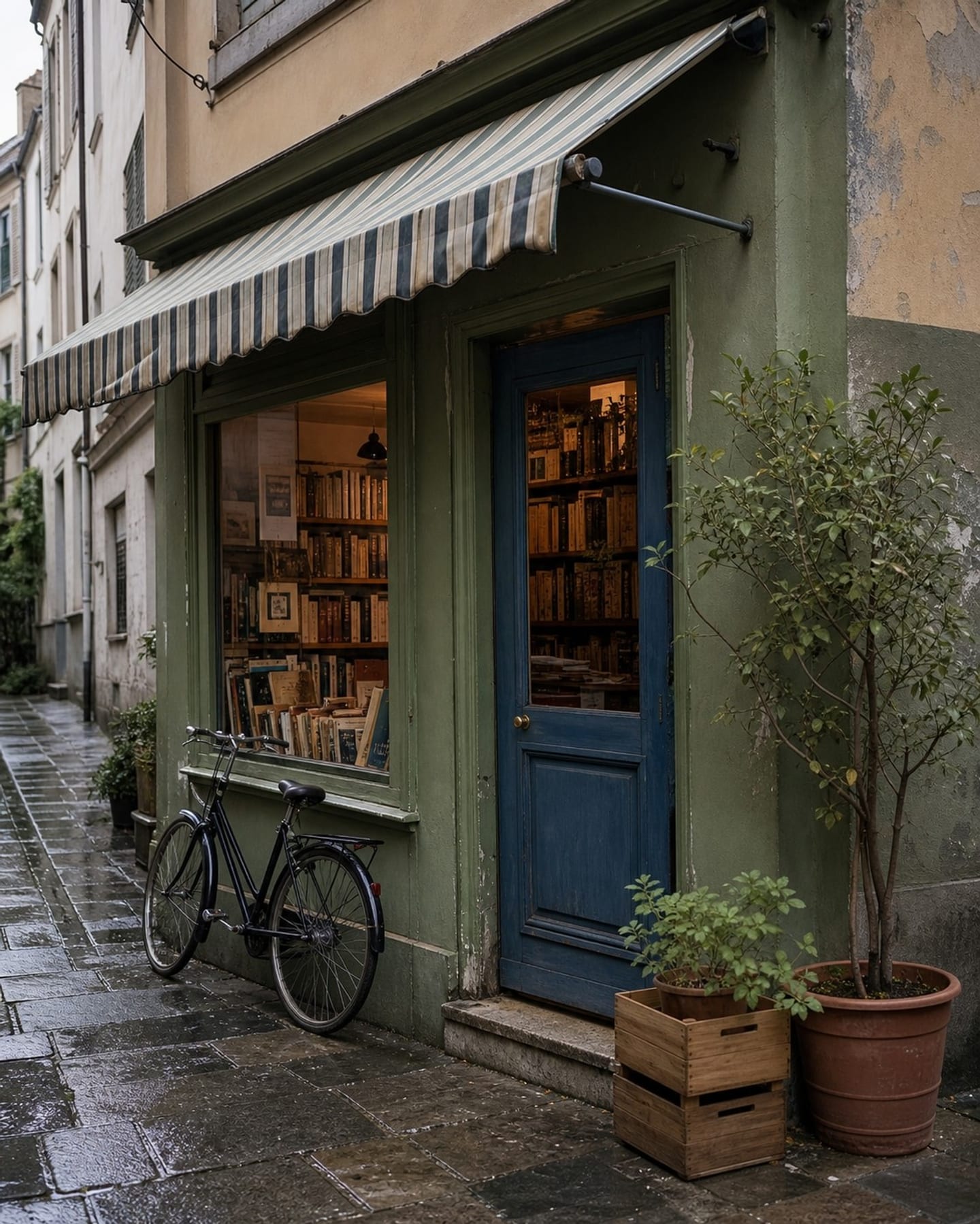
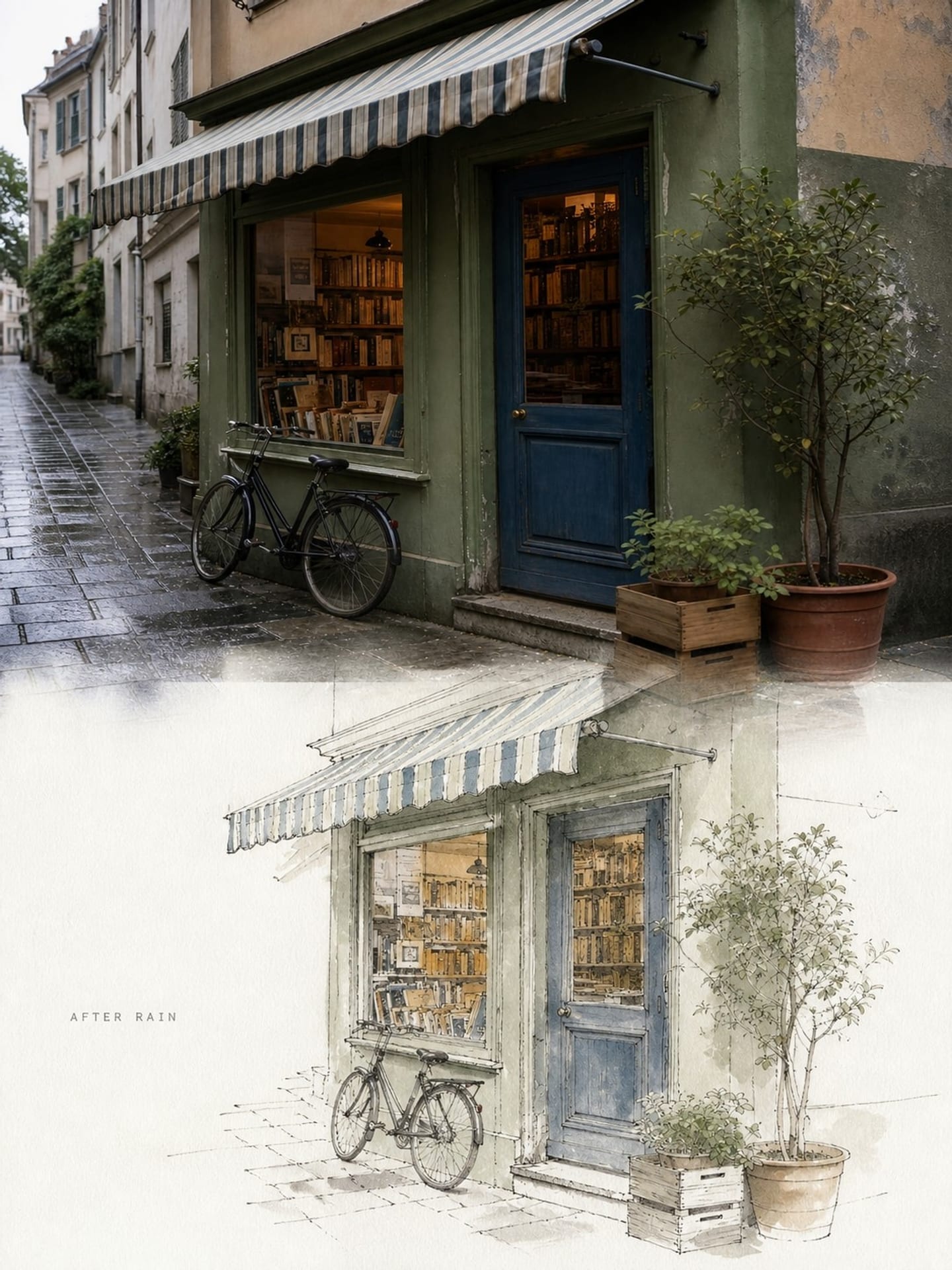
Pairs real photography with a sparse, rhythmic pen-and-wash observation that knows when to stop.
Photo Skill documented with a real comparison
Pairs real photography with a sparse, rhythmic pen-and-wash observation that knows when to stop. Observational Pen Wash is a reusable transformation method rather than a fixed color filter. It reads the people, objects, pose, spatial relationships, and dominant visual cues that are actually present in the uploaded photograph, then rebuilds the presentation around that evidence. The input and output shown above are the most direct proof of what the current published version does.
The method currently sits around Pen Wash, Notebook, Editorial. A different source photograph will not produce an identical layout, because the system must respond to that image's subject, aspect ratio, light, and background. The central identity, meaningful pose, and important object relationships should nevertheless remain recognizable. Use the visible comparison to decide whether this method is a good match before you upload personal material.
A person, animal, building, or object with a clear silhouette gives the transformation reliable identity anchors. If the subject is already tiny, blurred, or hidden, stylization cannot safely recover missing visual evidence.
Hands, held objects, furniture, companions, and horizon lines should be separated clearly enough to understand. This helps the result preserve the event in the photograph instead of treating every shape as decoration.
The source does not need to resemble the finished artwork, but it should have enough resolution and breathing room for Observational Pen Wash to reorganize color, surface, and composition without losing the main subject.
Use the camera file when possible. Avoid screenshots containing app interfaces, heavy existing filters, large obstructions, or repeated compression, because those artifacts can be interpreted as part of the scene.
The creator's optional guidance is: Optional: enter one exact short line to place in the negative space. Leave empty for no text. The wording is reproduced without translation. Treat it as clarification, not a request to replace what is visibly present.
Check the face, pose, object count, contact relationships, and overall composition first. Then evaluate palette and texture. If essential content is wrong, retry with a clearer source rather than attempting to repair missing evidence with a long prompt.
Pairs real photography with a sparse, rhythmic pen-and-wash observation that knows when to stop. It primarily changes the visual presentation while the central subject and meaningful relationships should remain identifiable.
No. Add one only when the photograph cannot communicate a required place, accessory, color, or short wording. The current creator guidance is: Optional: enter one exact short line to place in the negative space. Leave empty for no text. The wording is reproduced without translation.
No. The comparison shows the method, composition tendency, and expected quality range. Your result is rebuilt from your own subject, aspect ratio, lighting, and background.