Dog photo to textile-toy guide
Turn a dog photo into knitted toy-bust artwork, not a promised physical replica
A pet portrait can remain recognizable after its fur becomes yarn loops and felt-like planes, but recognition comes from a few visible relationships rather than exact reconstruction. The generated result is an image of an imagined textile object. It is not a handmade commission, a memorial record, or instructions for constructing the toy.
The short answer
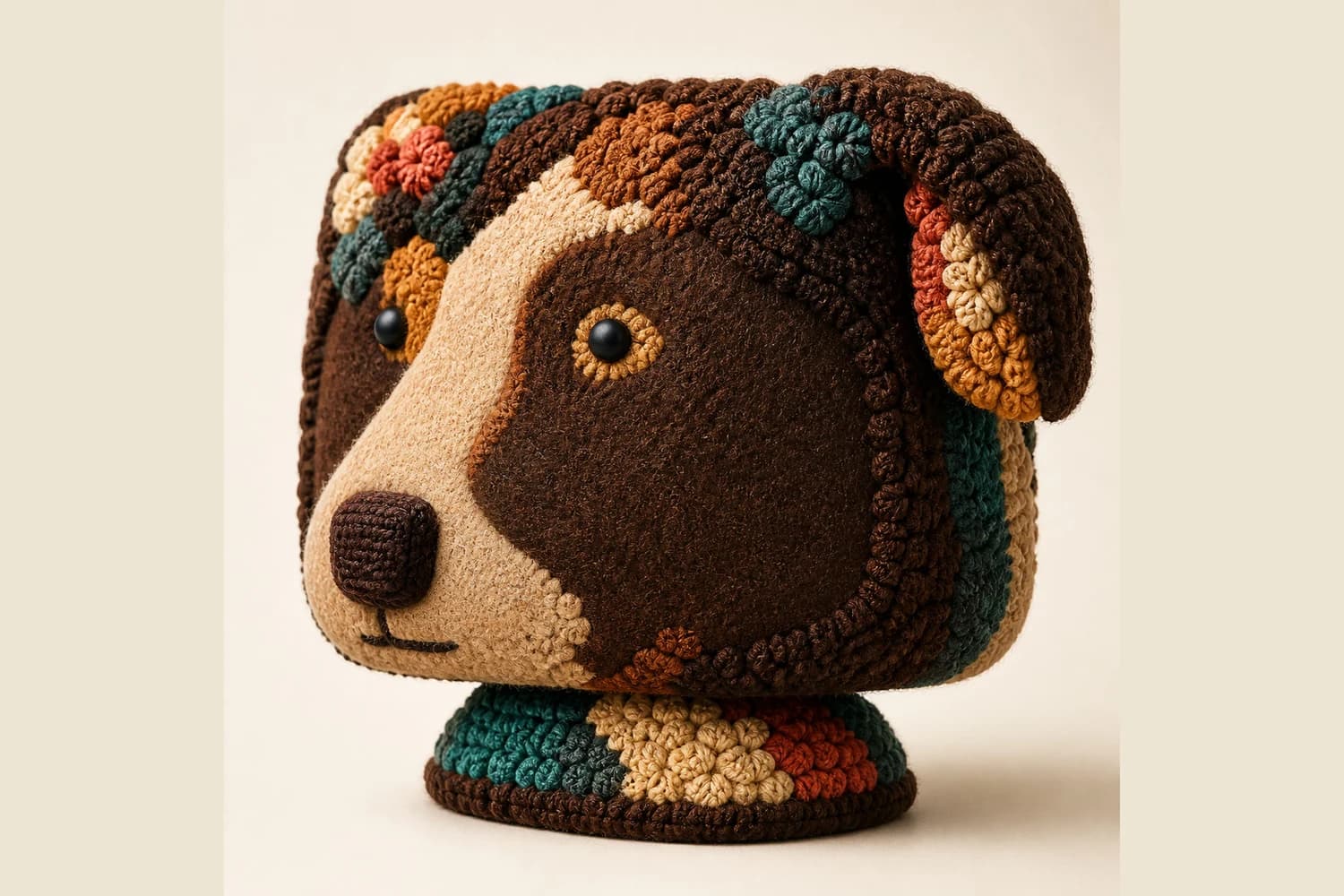
Start with a dog photo that clearly shows muzzle length, ear shape, coat boundaries, eye placement, and head direction. Apply Woven Whimsy Bust, then compare those cues while noting every changed proportion, color, viewpoint, and expression. The output is raster artwork depicting a textile toy, not a physical object, knitting pattern, stitch chart, sewing template, or exact pet replica.
What the reviewed dog pair preserves and changes
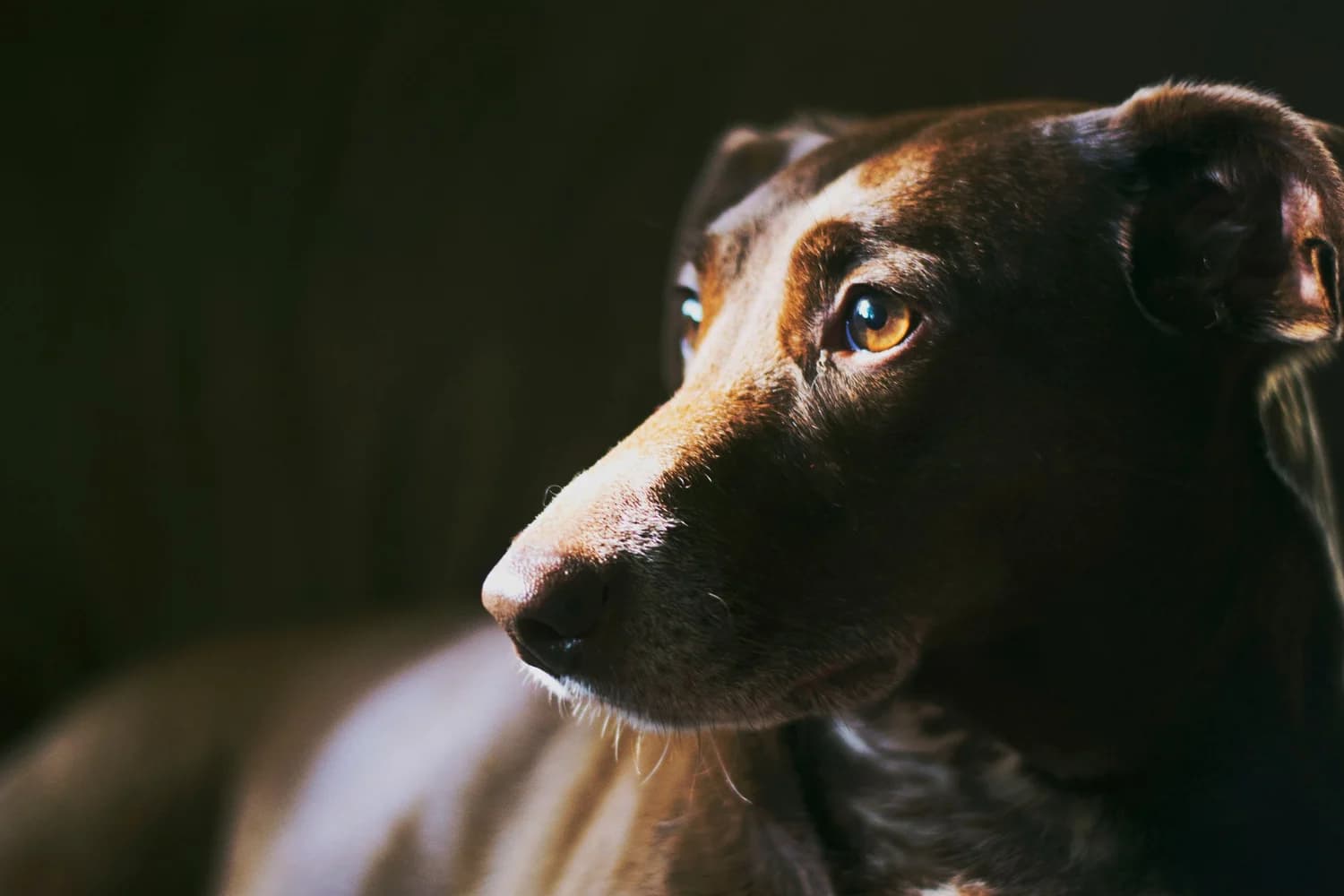
Em Hopper's source is a close dog portrait against a dark, out-of-focus background. The head turns toward the left side of the frame. A long cream muzzle, dark brown face, lighter brown forehead, amber eyes, folded ears, black nose, and white chest edge are visible. The Imagild result changes the view to a more frontal square bust on a warm studio background. It keeps a long pale muzzle, large dark facial fields, brown upper-head color, paired eyes, a dark nose, and folded ear masses. It also turns the eyes into dark beads, widens and squares the head, shortens the visible body, adds teal and rust textile accents, and replaces real fur with simulated crochet, knitting, and felt surfaces.
A three-step likeness review
- 01
Choose a reference with readable coat boundaries
Use a photo where the muzzle, forehead, ears, eyes, nose, and major coat patches are not hidden by motion, deep shadow, or another object. Note the original head direction and expression. A second reference may help you understand your pet, but the reviewed guide demonstrates only one uploaded source and one output. Do not assume a generated frontal toy will recover details that were absent from the chosen photograph.
- 02
Run the Skill and compare relationships, not individual yarn loops
Open Woven Whimsy Bust and use a photograph you have permission to transform. Start the review with muzzle-to-head length, ear placement, the boundary between light and dark coat, nose position, and overall head direction. Then note the intentional toy changes: simplified bead eyes, compressed bust, rounded-square head, large crochet clusters, felt-like facial planes, and a clean studio setting. Decorative stitches can support the style, but they should not be mistaken for source markings.
- 03
Decide whether you need an image or a makeable object
Use the raster result for a profile image, concept board, card, or visual reference after checking the crop and resolution. If you want to manufacture a physical toy, a textile maker still needs dimensions, yarn and felt choices, shaping, stuffing, structural support, stitch counts, joining instructions, safety decisions, and prototypes. The V&A describes knitting as fabric made from interlocking loops of yarn; the generated picture depicts that appearance but supplies none of the construction information.
Three boundaries for an honest pet-toy result
- Treat resemblance as an observed comparison
- The reviewed result retains broad dark and cream face regions, a long muzzle, folded ears, and a dark nose. It changes eye color, head width, viewing angle, expression, and material. Describe those visible similarities and differences. Do not claim biometric identity or exact likeness, and do not imply that one appealing example predicts how another breed, coat pattern, pose, or low-light image will translate.
- Do not market the image as a physical commission
- The picture may look photographed in a studio, but no textile object was delivered by this workflow. Avoid product photos, shipping claims, material specifications, measurements, child-safety statements, or handmade labels unless a real object has separately been made and verified. If the generated image is used to brief a craftsperson, label it as concept art and let the maker assess feasibility and construction.
- Keep a memorial use anchored to real records
- A stylized toy portrait can be emotionally meaningful, but it should not replace the original photos, name, dates, veterinary records, or written memories. Store those facts separately and add checked wording in a layout step. The generated expression and viewpoint are interpretations. They should not be described as a recovered photograph, a precise reconstruction, or a newly documented moment from the animal's life.
Official sources checked
Questions about dog-photo textile toy art
Will the result look exactly like my dog?
No exact match is promised. Compare broad coat regions, muzzle length, ear placement, nose, and head direction, then note changes in eyes, expression, proportions, viewpoint, and texture. Each input and generated result must be reviewed on its own.
Do I receive a knitted toy or a pattern?
No. The result is a raster image depicting an imagined textile bust. It does not include a physical object, yarn quantities, dimensions, stitch counts, crochet chart, knitting pattern, sewing template, stuffing plan, or assembly instructions.
Which source photo works best for this transformation?
Choose a sharp, well-lit portrait with visible muzzle, ears, eyes, nose, and coat boundaries. Avoid heavy occlusion and extreme darkness. A clear three-quarter or frontal view gives more source information to compare than a distant or blurred frame.