Photo-to-magazine cover guide
Make an AI magazine cover from a photo without trusting generated text
A generated editorial layout can establish hierarchy quickly, but the finished-looking words and supporting frames are still claims that need evidence. The safest workflow treats the image as a visual concept, checks every photographic region against the source, and rebuilds factual copy as editable type before publication.
The short answer
Choose a photo with one readable action, apply Street Portrait File, and compare the main subject, board, limbs, shadow, and each smaller frame with the source. Treat every generated name, date, issue label, slogan, and profile line as unverified draft pixels. Replace factual wording in a layout application, then proof it letter by letter before publishing.
What the reviewed skateboard cover proves and what it does not
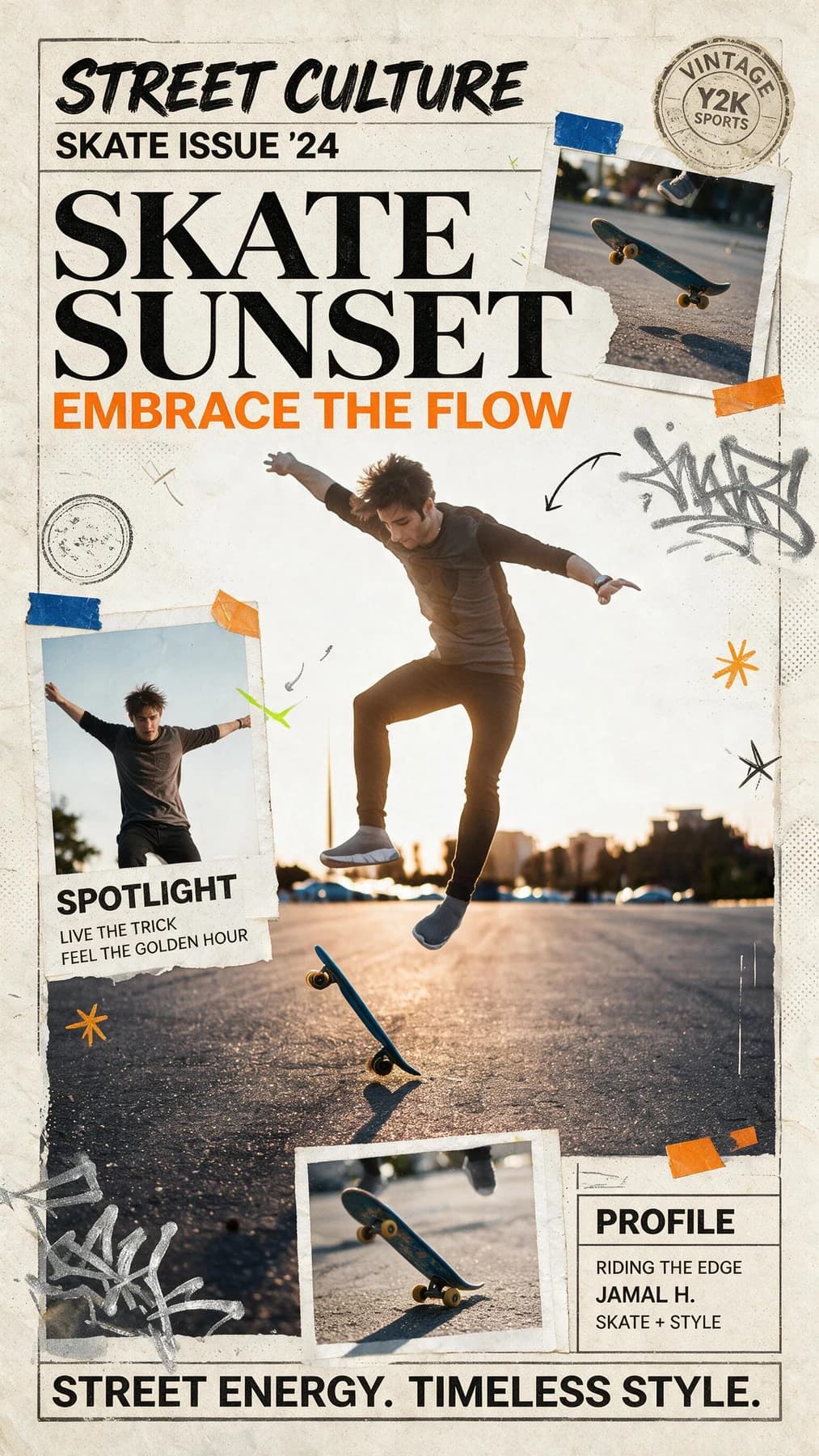
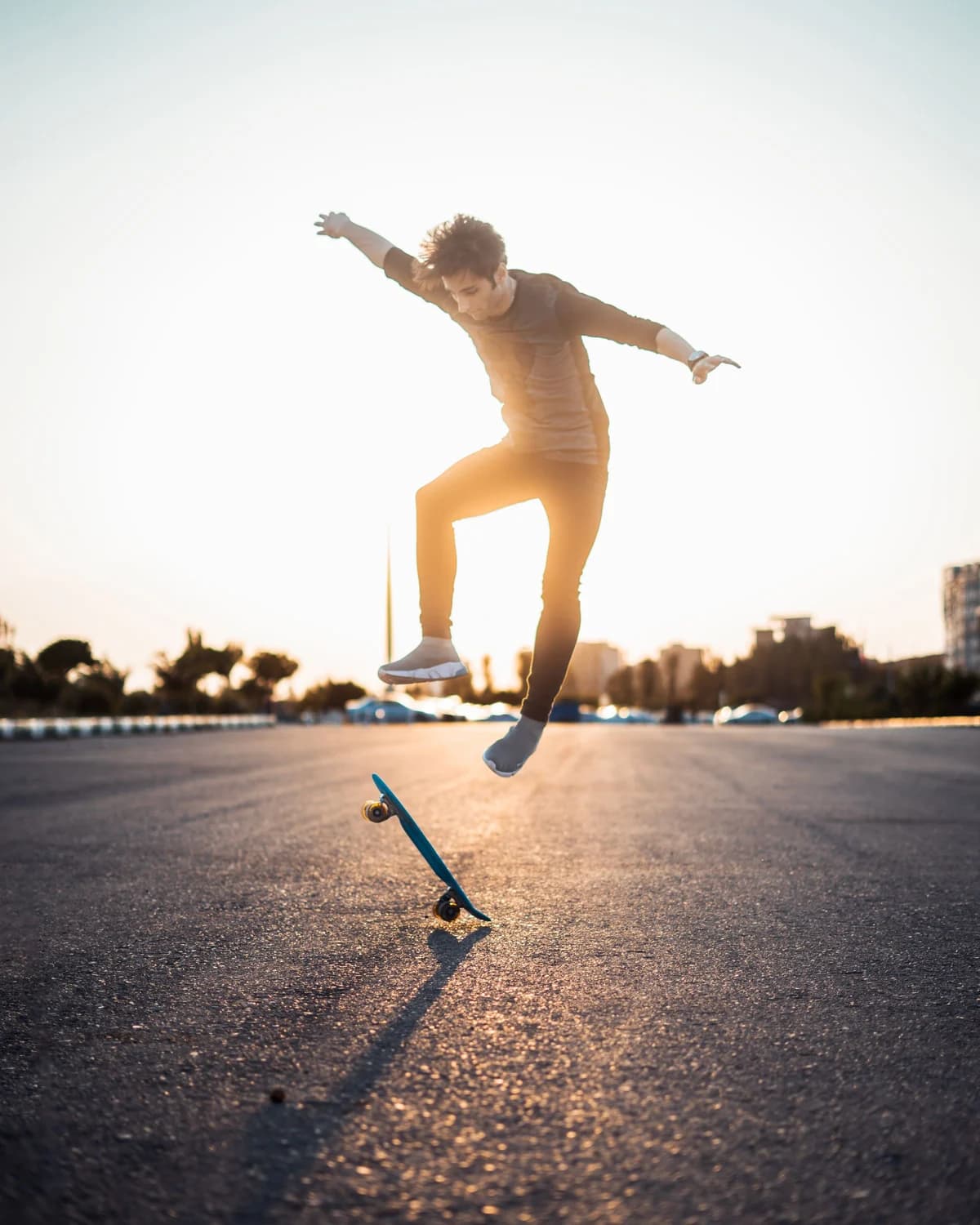
Milad Mohammadi's source photograph shows one skateboarder at golden hour, airborne over a tilted blue board on an open paved area. The person wears dark clothes, extends both arms, looks downward, and casts a long shadow toward the camera. The Street Portrait File result keeps that action as the dominant central photograph and adds aged paper, tape, stamp-like marks, graffiti strokes, a large headline, and three smaller photographic panels. Those smaller panels resemble crops or reinterpretations of the source, but they are not evidence of three additional exposures. The visible name, issue year, profile copy, and slogans do not come from the source photograph. The face is small and angled down, so this pair cannot establish exact facial continuity. The delivered composition is one raster image, not a layered magazine document with editable type.
A three-pass editorial review
- 01
Write the facts before generating
Record only information you can verify: the subject's approved name or initials, the publication title, date, location, headline, and any credit line. If the picture is a fictional concept, say so and avoid biographical or event claims. Street Portrait File can use exact wording supplied by the user; if you leave wording open, expect decorative English copy that must be reviewed. Keep the source license or permission record with the brief. The Pexels page identifies the photographed source and creator, but it does not validate any name or story invented inside the generated cover.
- 02
Trace every photographic region back to the source
Start with the dominant action. Compare the number of people, arm direction, visible hands, leg positions, shoe, blue board, wheel placement, horizon, and long shadow. Then inspect each subordinate panel. A close view of the board may be a useful editorial detail, yet it remains a generated crop or interpretation unless you supplied a separate photograph. Do not describe the panels as a burst sequence, another trick, or several moments from the session. The reviewed result also changes framing and enlarges the action, so check edges and body parts at the intended display size.
- 03
Replace claims with editable, approved type
Copy every visible word into a proof sheet and check spelling, dates, names, punctuation, and reading order. Remove unsupported profile facts and any wording that implies a real publication, event, sponsor, or endorsement. The ICCV 2025 FonTS paper treats accurate wording and typography control as a separate image-generation problem, which is a useful reason to inspect rather than assume. Adobe documents corrections through editable type layers. Because the Imagild result is raster artwork, rebuild final wording as new type in a suitable layout application, retain the clean source file, and obtain the required approvals before export.
Three decisions that separate concept art from a publishable cover
- Let one action control the hierarchy
- The central jump works because it is larger than the decorative material and still carries the board, body, ground, and sunset relationship. Smaller panels should support that reading, not invent a competing story. Test the cover at thumbnail size and at its final social or print size. If the headline hides a hand, the board disappears, or a secondary panel looks like a different event, simplify the composition or choose another result.
- Separate visual atmosphere from factual meaning
- Paper wear, tape, arrows, stamps, and graffiti-like marks can create street-editorial atmosphere without stating facts. Names, years, issue numbers, locations, affiliations, prices, and quotations are different because a viewer can read them as claims. Treat automatic wording as placeholder material even when it is spelled correctly. Do not attach a fabricated identity to the photographed person, and do not imply that the subject endorsed a publication or campaign.
- Finish for the real destination
- A social preview, digital zine, school project, client pitch, and printed cover have different size, permission, and production needs. The generated file does not supply trim, bleed, separations, a printer profile, or editable text. Confirm pixel dimensions, safe areas, contrast, text size, source rights, and any required AI disclosure for the destination. Keep the original photograph and approved copy separately so future corrections do not depend on repainting words embedded in pixels.
Official sources checked
Questions about AI magazine covers from photos
Can I publish the generated cover text as it appears?
Only after every word and implied fact has been checked. In the reviewed result, the name, issue year, profile details, and slogans are not supported by the source photograph. Replace factual copy with approved editable type, confirm permissions, and proof the final export at full size.
Are the smaller skateboard panels separate photographs?
Not in this evidence set. The input contains one photograph. The additional panels should be described as generated crops or interpretations of that one source, not as a real sequence, extra exposures, or proof that several moments were photographed.
Does this result prove the same face was preserved exactly?
No. The source face is small, partly shadowed, and angled downward, so this pair supports comparison of the broader action, clothing, silhouette, and board relationship only. A generated magazine image should not be used for identity verification.