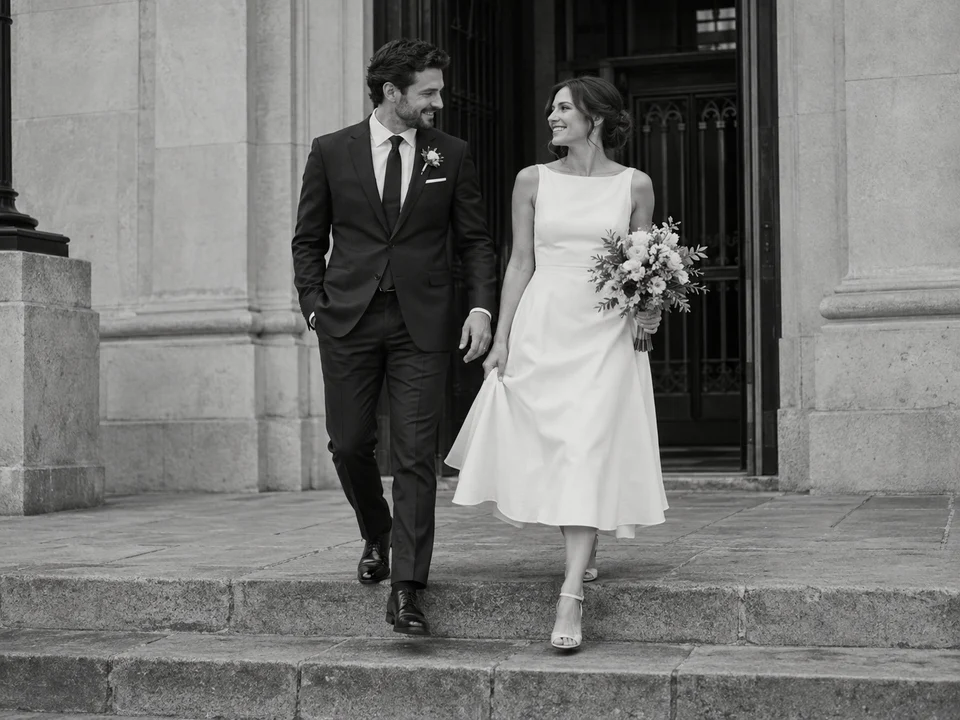
Choose the portrait composition your source can support before comparing artistic treatments. A face-only photograph, a waist-up view and a complete standing image provide different evidence. A painting-like finish can change texture, but it does not reveal clothing, hands or people outside the source frame. This guide decides source compatibility; the separate portrait-direction guide compares lighting, setting and aesthetic choices after that decision.
Write the intended output crop first
Record the required composition in plain terms: close face, chest-up portrait, seated waist-up image, full-length figure or two-person portrait. List the details the reviewer must verify. A close avatar may need readable eyes and hairline. A full-length commission may also need the actual shoes, dress hem and hand placement. Do not call an invented lower body preserved merely because the face remains familiar.
Place the source beside this requirement. Mark each requested detail visible, partly visible or absent. Use the actual photographic evidence rather than the total file size. A large group photograph can still contain a tiny face.
Use a source-compatibility matrix
| Source evidence | Output supported for review | Additional decision |
|---|---|---|
| Clear face and complete hairline | Close portrait with comparable orientation | Shoulders and new clothing may be interpreted |
| Face, shoulders and visible neckline | Chest-up treatment | Hidden hands remain unverified |
| Seated waist-up view | Similar seated crop | A standing pose requires unseen-body invention |
| Complete standing person | Full-length treatment near that pose | Check feet, hem and limb relationships separately |
| Two clear people | Restrained couple composition | Each person needs an independent likeness check |
| One clear face and one obscured face | Only the visible identity has a useful review basis | Obtain a clearer couple source or change the requested task |
These are editorial admission decisions, not guaranteed input rules for any vendor. Use only the input types a chosen workflow currently accepts. A tool accepting several references does not establish that Imagild offers the same controls.
Work through a rejected full-length request
In this constructed exercise, a client supplies a head-and-shoulders photograph and requests a full-length illustration showing their real wedding outfit and shoes. The face, collar and top of the jacket are visible. The hem, hands and shoes are absent.
The first proposal is to enlarge the input and ask for exact preservation. Reject it: more pixels cannot reveal the missing outfit. The second proposal retains the source coverage and makes a chest-up illustration. Accept that composition only if the client agrees that the smaller crop serves the placement. The third obtains an authorized full-outfit photograph and uses it as additional evidence in a supported external workflow. Admit that route for review if its inputs are actually supported; do not call it automatic identity training.
Select the style within the admitted composition
Once the crop and unknown details are agreed, compare contour, color relationships and texture. Keep the admitted source and protected details fixed. If the chosen treatment heavily simplifies glasses or a distinctive collar, reconsider that treatment without reopening every composition decision.
Runway's reference documentation illustrates vendor-specific reference preparation. Its workflow supplies context for using images as guidance, not proof that hidden anatomy is recovered. Inspect the current Imagild Skill Market for available creative treatments; this guide does not promise native arbitrary-reference roles or strength sliders.
Keep the admission note with the handoff
Name the source, approved output crop, protected visible features and deliberately interpreted regions. Ask the represented person to approve the actual image. If a later request changes chest-up to full-length, repeat source admission instead of silently expanding the original permission and fidelity claim. No portrait was generated for this exercise, and source compatibility does not guarantee a successful output.