No. Creating several Imagild API keys for the same account does not create several independent account rate budgets. The current read and write checks use the owning account: 120 reads and 10 generation/upload writes per minute. Use separate keys for operational control, then coordinate their traffic through one account-aware scheduler.
Key Takeaways
- Development, production and dashboard traffic can compete for the same account budget.
- Key rotation does not reset the account's generation allowance or points wallet.
- Allocate traffic centrally and leave room for status reads, downloads and retries.
Draw the account boundary first
List every integration using the account: a website backend, scheduled artwork, a video tool and an internal dashboard. Identify their keys without copying secret values into the inventory. Requests from those integrations still belong to the same account even when they come from different machines.
The Imagild API console provides key management and the current rate contract. Active membership is required for API calls, and media generations use existing account points. Buying another points pack does not itself increase the stated request limits or unlock API membership.
Rate-limit scope is service-specific, as MDN explains for HTTP 429. A separate key is not evidence of a separate allowance unless the receiving service explicitly says so.
Budget by request class and application
Consider this deliberately conservative allocation. It is your application's policy, not a set of quotas configured inside Imagild:
| Integration | Planned writes/minute | Planned reads/minute |
|---|---|---|
| Interactive creation backend | 3 | 30 |
| Scheduled media worker | 3 | 30 |
| Review dashboard | 2 | 30 |
| Total planned | 8 | 90 |
| Unallocated headroom | 2 | 30 |
The totals stay below the current 10-write and 120-read ceilings. They do not authorize a burst at the start of every calendar minute. Pace actual requests across time, and honor 429 cooldowns if traffic still exceeds the gateway's checks.
Reads include model discovery, task status and authenticated output requests. Writes include reference uploads and generation submissions. Count calls, not completed images: polling one job repeatedly can consume many reads while producing no additional media.
Coordinate traffic before it reaches the API
Put account identity, request class and next eligible dispatch time in your application queue. All services using that account should acquire permission from the same coordinator. Independent in-memory limiters in separate application processes cannot, by themselves, coordinate the total.
For a small deployment, one submission service can own dispatch. A larger application can use a durable queue and shared coordination mechanism that you maintain. Either way, preserve each generation's stable operation key and task ID across process restarts.
Do not describe the server's current limiter as a globally consistent distributed quota service. Its implementation and a client's coordination policy are separate concerns. The safe operational decision is to respect the published ceilings rather than trying to route around them.
Separate rate capacity from spending and completion
Eight allowed submissions can have very different costs. Eight 1K image requests currently plan 80 points; eight four-second 768P video requests plan 480 with enhancement off. Neither calculation predicts how many tasks finish within a minute.
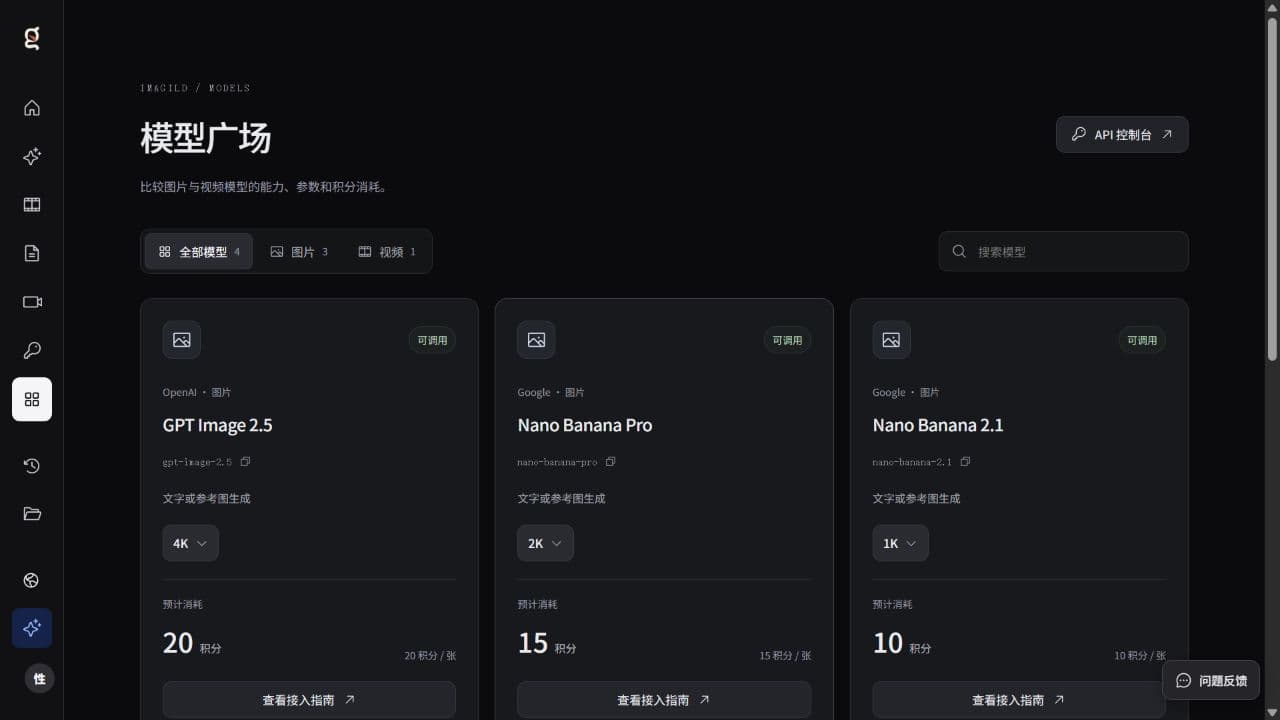
Check the model hub before quoting generation points, and use the points planning guide for wallet context. A request budget is not a points budget or a provider concurrency promise.
Reserve enough reads for users to retrieve completed work. A dashboard that refreshes every task on every screen redraw can starve useful reads without improving generation speed.
Prove the shared behavior in your own client
Use local fixtures representing two keys tied to one account. Feed both through the coordinator and inspect the combined dispatch log. They should share one write schedule while retaining separate sanitized key labels for diagnosis.
Next, simulate one integration receiving 429. Confirm its cooldown updates the account's affected request class and does not trigger a wave of alternate-key retries. For unexpected failures, consult the failed-job checks. Accept the design when changing keys preserves operation history and the combined traffic remains bounded, without promising higher throughput simply because more credentials exist.
Related tasks
- Imagild Points, Resolution and Jobs: Plan a Creation Before You Spend
- What Should You Check Before Retrying a Failed Image or Video Job?
Sources and scope
- Imagild API console: Current request limits, retry handling, authentication and asynchronous task lifecycle.
- Imagild model hub: Current model options and media-generation point costs, separate from request-rate budgets.
- MDN HTTP 429: Rate-limit scopes depend on the receiving service; extra credentials do not establish independent allowances.
Product instructions were checked against the current Imagild API contract and the public model catalog. Code, budgets and acceptance checks are illustrative; this article does not claim a new paid generation test, an uptime measurement, a search-volume study or a ranking of AI citations.
Prepared by Imagild Editorial, the company editorial team responsible for these guides. AI assisted research and drafting. This is documentation-based guidance with proposed examples, not a claim of hands-on testing or an independent product review. Report a correction.
Cover: Original Imagild product screenshot captured on 28 October 2026; model availability and prices may change. This image is not an API response or a performance benchmark.