A generation request can return HTTP 409 when an Imagild idempotency key was already used with different parsed parameters or a different generation kind. The key identifies one logical operation. It is not a reusable slot for revised prompts, upgraded resolutions, or a second model choice.
Key Takeaways
- Same key plus the same parsed request reuses the existing task.
- A deliberate change to accepted generation parameters requires a new approved operation.
- Investigate a conflict before generating another key; the original task may still be running.
Compare the original approval with the new request
Suppose a 1K image was accepted using product-cover-0007. A user later selects 4K, but the application resends the old key. The conflict protects the distinction between the first paid request and the upgraded candidate.
For otherwise valid, authorized requests:
| First accepted request | Later request under the same key | Interpretation |
|---|---|---|
| Model A, prompt A, 1K | Same parsed parameters | Recover the existing operation |
| Model A, prompt A, 1K | Same prompt, 4K | Different paid request; conflict |
| Model A, prompt A, 1K | Model B, same prompt and tier | Different model decision; conflict |
| Image generation | Video generation | Different generation kind; conflict |
| Accepted prompt A | Edited prompt B | Different creative instruction; conflict |
Unsupported fields are another issue. An image request containing n, seed, or size fails the strict request contract; do not assume every rejected request is an idempotency conflict.
Use parsed equality without depending on normalization tricks
Imagild compares the validated, parsed request. For example, prompt text is trimmed and image resolution defaults to 1K when omitted. The comparison is therefore not simply a raw HTTP byte comparison.
That does not mean your client should deliberately vary formatting and infer which mutations are harmless. Save one valid payload and resend it unchanged during recovery. Stable application snapshots are easier to inspect than a series of reconstructed “equivalent” requests.
Stripe's idempotency reference also explains parameter-mismatch protection. Its replay retention and response-storage semantics are Stripe-specific and must not be copied into Imagild documentation.
Build a conflict inspection record
Before sending anything else, load the application's original record. Compare these fields with the proposed request:
Owning Imagild account
Generation endpoint
Operation key
Model ID
Prompt snapshot
Resolution
Reference selector type and value
Video-only settings, when applicable
Saved task ID and last known state
Do not log the Bearer credential or expose private prompts in a shared support ticket. A sanitized record should retain operation and task identifiers, error code, and request ID when returned.
If the original record is missing, stop guessing. Reconcile the operation using available application evidence and support rather than fabricating a new key merely to bypass the response.
Choose the right correction
If this was intended as a retry, restore the original payload and key. If a task ID is already known, read that task through the API console's documented workflow instead of repeating generation to inspect progress.
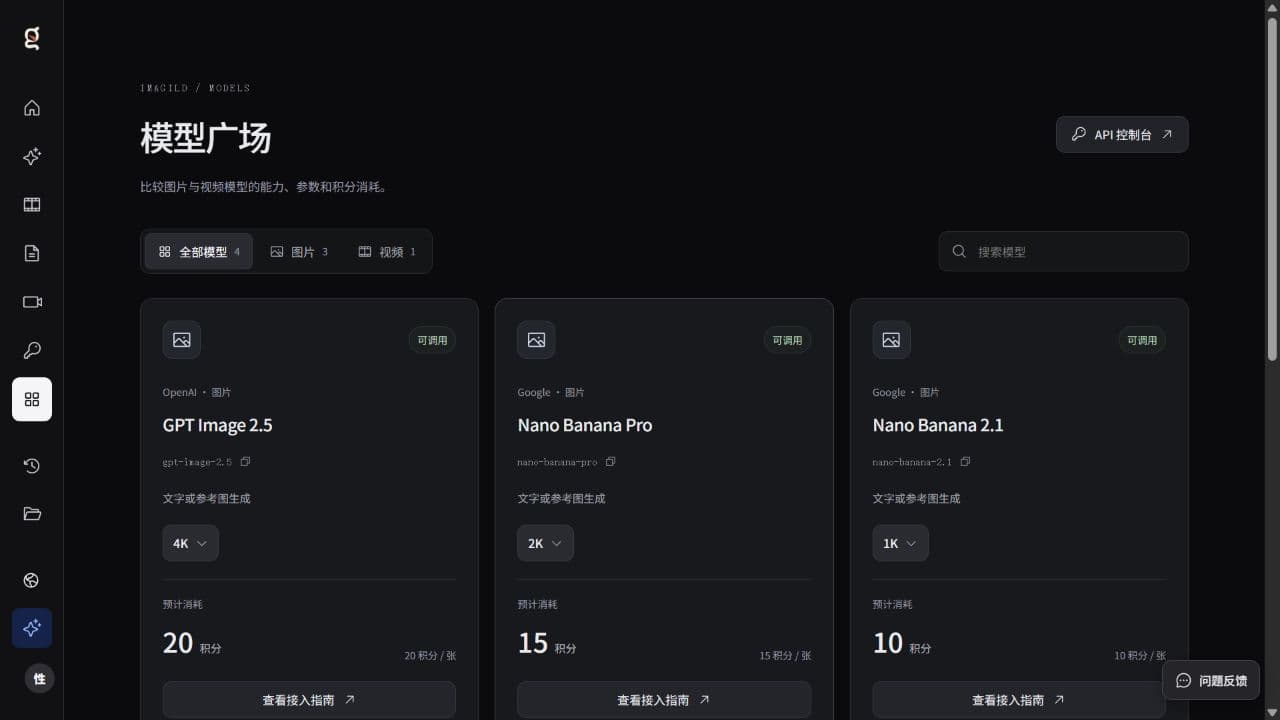
If the user deliberately changed the brief, preserve the earlier task and ask them to approve a new operation. Quote its cost before submission. Current image tiers are 10 points for 1K, 15 for 2K, and 20 for 4K in the model market. Active membership remains required independently of points.
If the earlier outcome is unknown, retain its identity and reconcile it before presenting another attempt as a repair. A new operation does not cancel or settle the old one.
Keep the explanation visible in your application
A useful conflict message says, “This request ID belongs to the earlier 1K image. Check that task, or approve a new 4K candidate.” A generic “Try again” button hides the actual decision.
Use the failed-job next-action guide when a task exists and the points planning guide when approving additional work. The contract provides task reuse for matching operations, not a global exactly-once guarantee or unlimited revisions under one payment.
Related tasks
- What Should You Check Before Retrying a Failed Image or Video Job?
- Imagild Points, Resolution and Jobs: Plan a Creation Before You Spend
Sources and scope
- Imagild API console: Idempotency reuse/conflict, request fields, asynchronous recovery and active membership.
- Imagild model market: Current image tier costs for a newly approved operation.
- Stripe idempotent requests: The general role of parameter mismatch protection; Stripe replay details are not attributed to Imagild.
Product instructions were checked against the current Imagild API contract and the public model catalog. Code, budgets and acceptance checks are illustrative; this article does not claim a new paid generation test, an uptime measurement, a search-volume study or a ranking of AI citations.
Prepared by Imagild Editorial, the company editorial team responsible for these guides. AI assisted research and drafting. This is documentation-based guidance with proposed examples, not a claim of hands-on testing or an independent product review. Report a correction.
Cover: Original Imagild product screenshot captured on 28 October 2026; model availability and prices may change. This image is not an API response or a performance benchmark.